In the vast realm of automotive care, few subjects are as colorfully debated as antifreeze or coolant. The vibrant hues of these essential liquids have led to a myriad of myths, misconceptions, and misunderstandings. One of the most persistent beliefs is that the color of the coolant reveals its chemical composition and quality. In this article, we’ll dissect this myth, shedding light on the true relationship between antifreeze color and its properties. Does antifreeze color determine its type?
The Colorful World of Coolants
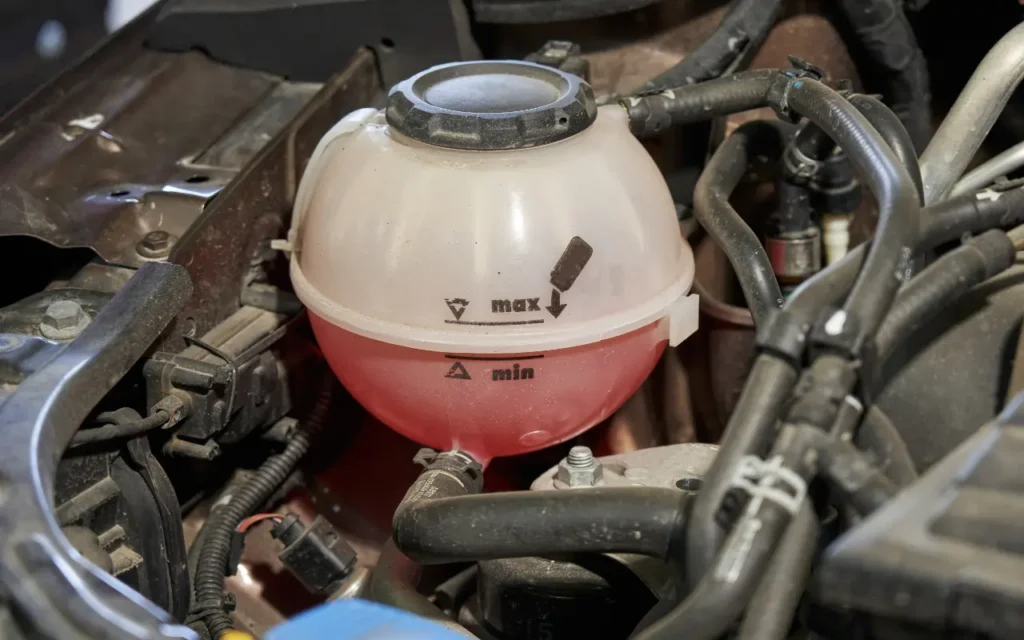
When you pop open the hood of a car and glance at the coolant reservoir, you’re greeted with a liquid that might be green, orange, pink, blue, or even purple. These colors, while visually striking, are not natural indicators of the coolant’s chemical makeup. Instead, they’re the result of a minuscule amount of pigment added during the manufacturing process. This pigment represents a mere 0.001% of the coolant’s total composition.
The True Nature of Coolant Ingredients
All primary ingredients in coolants, such as ethylene glycol, water, and corrosion inhibitors, are inherently colorless. This means that once the manufacturing process concludes, it’s virtually impossible to distinguish between an old traditional IAT (Inorganic Acid Technology) coolant and the most advanced OAT (Organic Acid Technology) coolants based on color alone.
However, it’s essential to understand the differences between these coolants beyond their appearance. Traditional IAT coolants, while once the standard, are no longer recommended for modern vehicles. The evolution of car engines and cooling systems has rendered IAT coolants less suitable for several reasons:
Heat Dissipation: Modern car engines are designed to operate at higher temperatures and require coolants with superior heat dissipation capabilities. IAT coolants, in comparison to their OAT counterparts, may not provide the necessary thermal conductivity, potentially leading to overheating issues.
Longevity: IAT coolants generally have a shorter lifespan, necessitating more frequent changes. In contrast, modern OAT coolants are formulated to last longer, offering better mileage and reducing the need for frequent maintenance.
Deposits and Residue: One of the significant drawbacks of using IAT coolants in modern engines is the potential for deposit buildup. Over time, these coolants leave residues in the intricate cooling systems of contemporary vehicles, leading to blockages and reduced efficiency. Modern engines, with their advanced cooling systems, require coolants that leave minimal to no deposits.
Historical Backdrop: The Green and Blue Standard
Historically, the antifreeze industry was dominated by the iconic green (US) or blue (Europe) coolant, known for its IAT. This color was chosen more for its visibility and differentiation than any chemical significance. However, as automotive technology advanced and engines became more sophisticated, there was a need for coolants with different formulations. This led to the introduction of new colors, each representing a different type of coolant. Over time, this color differentiation sowed the seeds of the myth that we’re debunking today.
The Essence of Quality:
Beyond the color lies the true essence of a coolant – its formulation. The chemical composition, the balance of ingredients, and the technology behind it are what truly define its quality. It’s these factors that determine how effectively a coolant can regulate engine temperatures, prevent corrosion, and ensure the longevity of the cooling system.
The Deceptive Nature of Colors: Sulfuric Acid vs. Water
At first glance, both sulfuric acid and water appear clear and colorless. Yet, their inherent properties couldn’t be more different. While water is essential for life, hydrating our bodies and facilitating numerous biological processes, sulfuric acid is a potent and dangerous substance that can cause severe harm upon contact. This analogy serves as a stark reminder that appearances can be deceptive, especially when it comes to the world of antifreeze.
The Perils of Color-Based Selection: A Real-World Example
When it comes to selecting the right coolant for a vehicle, relying solely on color can lead to costly mistakes. Let’s delve into a real-world example that underscores the importance of understanding coolant compositions over their visual appeal.
Volkswagen G11 vs. KIA Coolant: A Tale of Two Blues

At a cursory glance, Volkswagen’s G11 coolant and KIA’s coolant both exhibit a striking Blue-Green hue. However, beneath this shared color lies a world of difference in their chemical compositions and intended applications.
Volkswagen G11: Classified as a HOAT (Hybrid Organic Acid Technology), the G11 coolant boasts a balanced blend of borates, silicates, carbon acids, and their salts. Used by VAG between 1980-1997. This unique formulation results in the creation of a protective silicate film that envelops the entire cooling system, safeguarding it against potential damages.
KIA A-110 Coolant: Representing the Lobrid P-OAT (Lobrid Phosphate Organic Acid Technology) category, KIA’s A-110 coolant takes a different approach. It predominantly relies on phosphates for protection, while explicitly excluding silicates and borates from its composition. This distinction is crucial, especially for KIA vehicles, as their cooling systems are specifically designed to function optimally with this particular coolant type.
Despite their nearly identical colors, these two coolants are formulated based on distinct technologies and are applied in different parts of the globe. Using them interchangeably, based on color alone, can lead to suboptimal performance and potential damage to the vehicle’s cooling system.
The Pitfalls of Judging by Color
Relying solely on color to determine the type or quality of a coolant can lead to several challenges:
Misleading Branding: Some manufacturers might choose a specific color for branding or marketing purposes, even if their product’s formulation is similar to another brand’s differently colored coolant. There are examples in the market, where cheap IAT coolants are painted in pink or violet to make a customer believe they are buying a Lobrid Si-OAT coolant used by Volkswagen
Global Variations: Different regions might have varying standards or preferences when it comes to coolant colors, leading to potential confusion.
Risk of Mixing Incompatible Coolants: Assuming two coolants are compatible based on their color can lead to mixing incompatible types, which can cause engine damage.
OEM Approval: A Reliable Indicator with Caveats
One of the most trustworthy methods to select the right coolant for your vehicle is to seek the car manufacturer’s approval. This ensures that the coolant has been rigorously tested and verified to work optimally with your specific vehicle model. However, even this method has its pitfalls. Phrases like “meets the specifications,” “meets OEM requirements,” or “recommended for” are often used in marketing. These statements can be misleading, making consumers believe a product is suitable for their vehicle when it might not be the optimal choice. Always look for explicit approval statements or certifications to ensure you’re getting the right product.
PROTEX3: A Gold Standard in Coolants
It’s essential to highlight that not all coolants are created equal. PROTEX3 Ultra and PROTEX3 Pro Line coolants stand out in the industry for their genuine quality. They have received explicit approval from leading car manufacturers, either as rebranded items or as standalone products. This endorsement is a testament to their superior quality, performance, and compatibility with a wide range of vehicle engines
Conclusion
The world of antifreeze is as complex as it is colorful. While the vibrant hues of coolants can be visually appealing, they should not be the sole criterion for selecting a product. It’s crucial to delve deeper, armed with knowledge and discernment, to ensure that our vehicles receive the care and protection they deserve. By understanding the nuances of coolants and looking beyond mere color, vehicle owners can make informed decisions that benefit their vehicles in the long run. The choice of antifreeze is not just about immediate needs but also about the long-term health and performance of a vehicle. A well-chosen coolant can extend the life of the engine, reduce maintenance costs, and enhance overall vehicle performance. It’s an investment in the vehicle’s future.